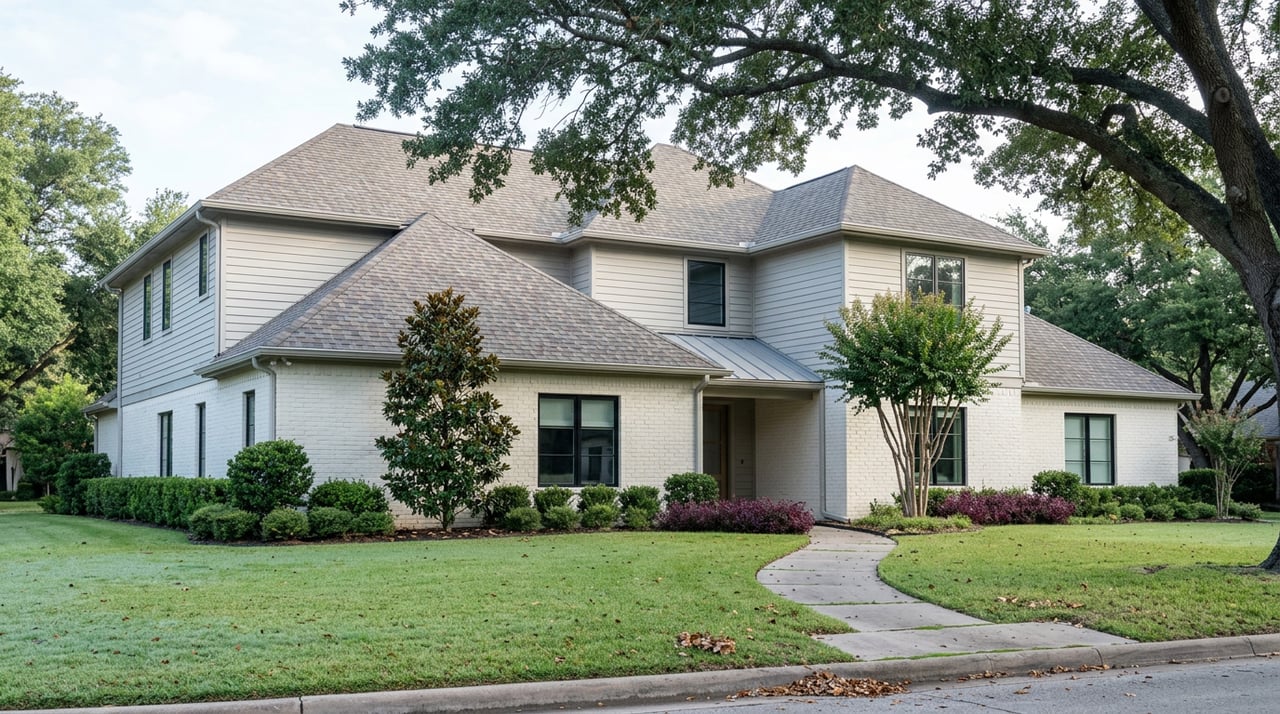
Why Two Homes in the Same Peachtree City Village Can Zone to Different Schools
September 3, 2026
September 3, 2026
Ask a handful of buyers moving to Peachtree City what the five villages mean, and most will describe them the way a brochure would: Aberdeen, Braelinn, Glenloch, Kedron, and Wilksmoor, each with its own character, its own shopping center, its own slice of the golf cart path network. That description is accurate. It is also incomplete in a way that catches buyers off guard at exactly the wrong moment, usually somewhere between an accepted offer and a due diligence deadline, when they discover that the village name on the listing does not tell them which elementary school their child will attend, what their real monthly housing cost will be, or where their home actually sits in the village's price range.
The five villages are a real structure, not marketing language. Peachtree City was chartered in 1959 as a planned community, and the original design called for each village to have its own shopping area, its own recreational facilities, and its own elementary school, all connected by the shared-use path system the city is known for. That plan is still the operating system for how the city is organized today. What it is not, more than sixty years and many thousands of homes later, is a guarantee that a village name maps cleanly onto a school, an HOA structure, or a price point. It maps onto a general area. The specifics live at the street level.
This is the piece that trips up buyers who are comparing neighborhoods from a distance, whether they are already local and move-up shopping or relocating from out of state and building a mental map from listing descriptions.
Inside Kedron Village, the Kedron Hills subdivision zones to Crabapple Lane Elementary, J.C. Booth Middle, and McIntosh High School, and nearby Smokerise Plantation follows that same trio. That sounds like a clean village-to-school link, until you account for the fact that attendance zones do not uniformly follow village boundaries. A Kedron Village address can zone to McIntosh High or to a different high school entirely, depending on the specific street, because the school district's boundaries were drawn around growth patterns and capacity, not around the five original village lines.
Braelinn is a good example of how far this can drift from what buyers assume. Braelinn Elementary sits within the Starr's Mill feeder pattern rather than McIntosh, which surprises buyers who assume the McIntosh zone covers all of central Peachtree City simply because McIntosh High School sits inside the city. Three high schools actually serve the area: McIntosh High, ranked 23rd in Georgia in U.S. News' most recent rankings; Starr's Mill High, ranked 25th; and Whitewater High, ranked 43rd. All three carry strong reputations. None of them line up with village boundaries in a way you can eyeball from a map.
The practical takeaway is simple, and it is the one piece of advice I give every buyer before they fall in love with a listing photo: verify school zoning by the exact property address, not by the village name in the listing description, and do it before you write an offer, not after your due diligence period has started ticking down.
Village names also obscure how many layers of dues a specific home actually carries. Peachtree City includes a mix of master associations and smaller neighborhood associations, and some properties belong to both, which means two dues statements rather than one. Condo and townhome communities layer on their own association fees as well.
The range is wide enough that "there's an HOA" tells you almost nothing on its own. Small single-family neighborhoods often run in the low hundreds of dollars a year. Amenity-rich communities with pools, gated entries, and maintained common paths can run from around a thousand dollars a year into the several-thousand-dollar range, depending on what the association covers. If the home you are considering sits near one of the city's private clubs, the math changes again: Flat Creek Country Club, Braelinn Golf Club, and Planterra Ridge Golf Club all carry separate membership dues that are not part of any HOA statement and will not show up unless you ask directly.
One detail worth flagging on its own, because buyers rarely think to ask about it until it becomes a problem: the golf cart path system that gives this city its identity is not maintained by a single entity. Some paths are city maintained. Others are the responsibility of a neighboring HOA. That distinction affects what your dues actually cover, and it is worth confirming in writing before closing, especially if cart-path access is part of why you are buying here in the first place. With more than 10,000 households in Peachtree City owning a golf cart, it is not a niche concern. It is closer to the norm.
Registration itself is a separate line item to plan for. Residents register a cart for a three-year cycle at $45. Non-residents pay $250 annually, split between a $15 registration fee and a $235 path user fee. Small numbers individually, but they are part of the true cost of living the lifestyle the village system was built around, and they are easy to overlook when you are focused on the mortgage payment.
If you are pricing a village by reputation rather than by subdivision, you will be wrong in both directions. Inside Kedron Village, Smokerise is an established subdivision with mature trees, walkable access to Kedron Village shopping, and a typical price range from the $700,000s into the low $1.1 millions. In Wilksmoor, the newest of the five villages and the one closest to Trilith Studios and the Pinewood Forest development, Planterra offers newer construction with access to Planterra Ridge Golf Club, priced from the $600,000s past $1 million depending on the build. Cardiff Park, inside Glenloch Village, is an established 1980s and 1990s subdivision with strong Highway 54 commute access, typically in the $500,000 to $800,000 range. Braelinn Estates, in Braelinn Village, offers older homes on substantial lots, some golf-course-adjacent, typically $500,000 to $900,000. At the more accessible end, the Cottages at Stoney Point and similar attached communities offer a Peachtree City address from roughly $250,000 to $450,000, and Aberdeen Village's original 1970s and 1980s ranch and split-level inventory tends to sit toward the more affordable end of the resale market.
Five villages, five very different price stories, and in several cases the range inside a single village is wider than the gap between two different villages. Naming the village gets you in the neighborhood of the right conversation. It does not get you a price.
Peachtree City saw some of the most aggressive price appreciation in the metro during the pandemic-era frenzy of 2020 through 2022, and buyers who were shopping during that window did not have the luxury of comparing subdivisions carefully. Offers went in within days, sometimes hours, and the incentive was to move fast on anything that looked right rather than confirm the details that looked close enough.
That pressure has eased. Redfin reported a median sale price of $590,000 in Peachtree City in February 2026, with homes selling in a median of 65 days, compared to 38 days the same month a year earlier. Movoto's numbers for March 2026 show a similar pattern from a different angle: a median sale price of $624,999, with homes spending 52 days on market compared to 27 days the year before. Two independent data sources, two different months, and both show homes taking roughly twice as long to sell as they did just one year earlier.
Pricing power has shifted with it. In the most recent 30-day snapshot tracked by Orchard.com, just 6.06 percent of Peachtree City homes sold above list price, down 13.9 percentage points from the same window a year earlier, while the sale-to-list ratio held around 98 percent. Compare that to the frenzy years, when sale-to-list ratios routinely cleared 100 percent and bidding wars were the norm rather than the exception.
A buyer with more time on the clock has more room to do the verification that a panic-bidding market never allowed. That is the real reason the village-versus-street distinction matters more now than it did two years ago. When homes move in a week, buyers rationally skip steps because there is no time to take them. When homes sit for seven to eight weeks, there is time to pull the exact school zone, request the full HOA and club fee picture, and compare the specific subdivision to true recent sales rather than a village-wide impression. The market has given buyers the room to get this right. Not everyone is using it.
Does every Peachtree City neighborhood have an HOA? No. Coverage varies by subdivision, and some pockets carry no HOA at all while others stack a subdivision association on top of a master association. Always confirm for the specific address rather than assuming based on the village.
Can I find out my exact school zone before I make an offer? Yes, and you should. Attendance zones are set at the address level, not the village level, so the only reliable way to confirm is to check the specific property before you write.
Is cart-path maintenance part of my HOA dues? Sometimes, and sometimes not. It depends on whether the specific path segment near the home is city maintained or maintained by that subdivision's association. Ask before closing, not after.
Peachtree City rewards buyers who understand it at the street level rather than the brochure level. If you are comparing villages, subdivisions, or specific listings and want a second set of eyes on the school zone, the HOA layers, or the true comparable sales for a specific address, I would be glad to walk through it with you. You can reach out to Angela Yoder to schedule a consultation.
This article is general information, not legal, tax or financial advice. Consult a qualified professional about your situation.
Stay up to date on the latest real estate trends.

For buyers, I bring strategic negotiation, local insight, and calm confidence in competitive situations. For sellers, I offer a thoughtful pricing strategy, strong marketing, and careful guidance to position your home for maximum value. It would be an honor to represent you and help you achieve your real estate goals.