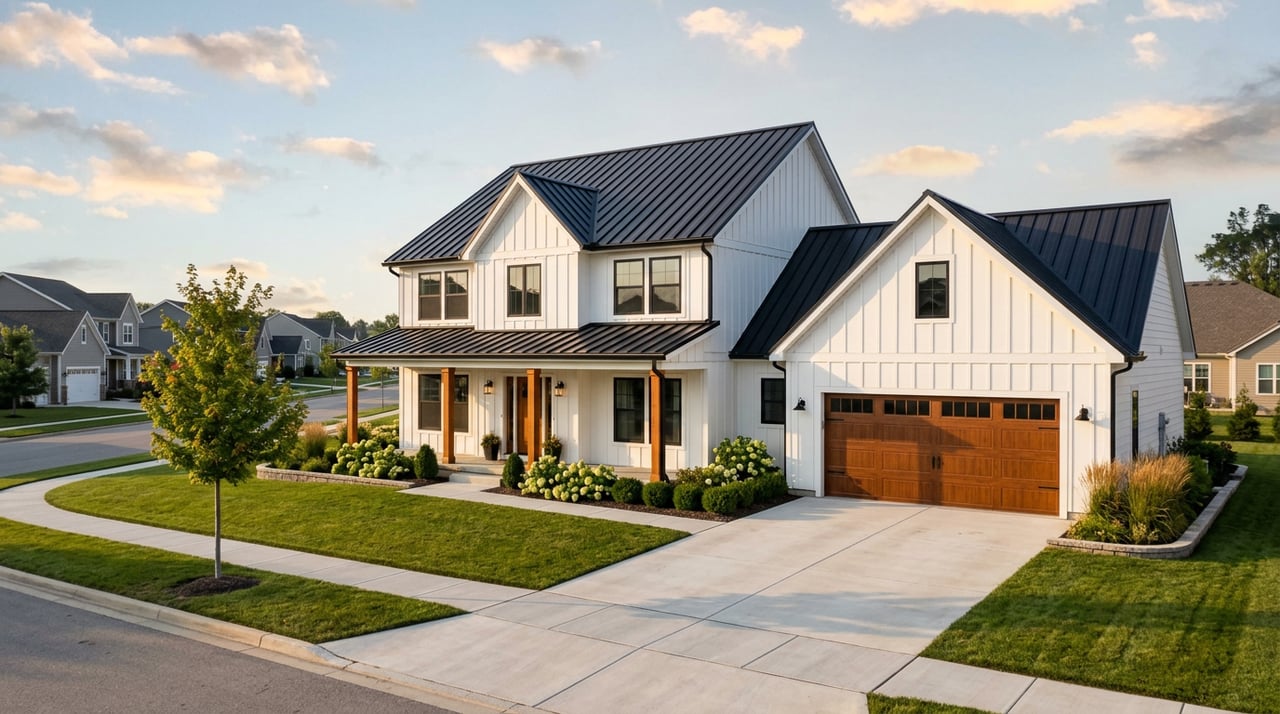
Newnan New Construction and Septic Systems in Coweta County
September 10, 2026
September 10, 2026
Two subdivisions can sit less than a mile apart on the same stretch of Highway 34, graded by the same red Piedmont clay, sold by builders offering the same closing-cost incentives, and still end up on completely different waste systems. One taps into county sewer. The other runs on a septic tank buried in the back yard. The difference has nothing to do with which road reached the pipe first. It comes down to a zoning line drawn years ago, and most buyers walking a model home never think to ask which side of it they are standing on.
I get some version of this question every few weeks from a buyer who assumed a brand-new house automatically meant municipal sewer. It is an easy assumption to make. It is also the kind of assumption that shows up as a surprise line item on an inspection report, right when a buyer thought the hard part of the process was behind them.
Coweta County's own water authority has been clear about how sewer access actually works outside city limits, in reporting the Newnan Times-Herald has covered directly. Standard single-family residential development is not permitted to tie into county sewer. The exceptions are narrow: age-restricted senior housing built under the county's RRCC zoning district, and developments built inside the specific "new community" zoning district, which includes the Shenandoah area on Poplar Road. That second category is why a project like the Del Webb by Pulte community near GA-34 can connect to county sewer while an ordinary new subdivision of single-family homes going up nearby cannot, regardless of how new the construction is or how close the nearest sewer main happens to run.
Coweta's 2026 infrastructure spending includes water and sewer projects. The Coweta County Water and Sewerage Authority is in the middle of a roughly $65 million capital push that includes a new Chattahoochee River raw water pump station, on top of the earlier Shenandoah Wastewater Treatment Facility expansion the authority said it hoped to finish around this year, a project meant to grow that plant's capacity from 2 million gallons a day to 6 million. In 2026 the biggest committed sewer users on the books are industrial. Recent data center projects working through county rezoning, Project Peach and Project Oak among them, come with sewer line extension requirements measured in miles. The authority also notified customers this month that water and sewer rates increase effective September 15, 2026.
The zoning framework that keeps standard single-family lots off the sewer grid remains in place.
If a new-construction community near Newnan is not age-restricted senior housing and not built inside the new community zoning district around Shenandoah, the safe assumption is septic until someone hands you paperwork that says otherwise. That applies whether the base price is under $300,000 or well into move-up territory. I have walked buyers through communities like Clemit Harris Place and The Retreat at Browns Ridge, both newer single-family neighborhoods in the area, where the septic question comes up the same way it would on any other unincorporated Coweta lot. Being new construction does not exempt a subdivision from the zoning rule. It just means the septic system underneath it has never been used.
For context on what these homes are trading at, Newnan's median sale price sat at $385,000 as of July 2026. That number spans homes on both systems, which is part of why the septic question deserves more attention than it gets. Two houses at the same price point can carry very different long-term maintenance obligations depending on which side of the zoning line they sit on.
A septic inspection in Fayette and Coweta counties typically runs $400 to $900, with most homeowners landing around $550. That is separate from routine pumping, which providers in the area recommend anywhere from every two to five years depending on household size and tank capacity. Neither cost is unusual on its own. What catches people off guard is the soil underneath it.
Coweta sits in Georgia's Piedmont region, where dense red clay dominates. Clay drains slowly and swells when saturated, which means drain fields here often need to be engineered larger than they would in sandier soil, sometimes with imported sand and gravel added just to get acceptable percolation. That is a real construction cost on the front end for new systems, and a real maintenance factor for existing ones. Homes on larger rural lots or lower-lying parcels tend to feel it first, especially after a wet spring, when slow drains and standing water near the drain field are the early warning signs.
Older homes inside downtown Newnan carry a different version of the same problem. Many were built decades ago with systems sized for a single bathroom and a much smaller household water load. A kitchen remodel or an added bathroom later in that home's life can push the original system past what it was ever designed to handle, which is worth knowing if you are the one selling a downtown Newnan home with an aging system, not just the one buying new construction on the edge of town.
A few questions, asked before you write an offer rather than after the inspection, save a lot of stress later.
I tell clients the real question is never whether they can live with a septic system. Most people can, and plenty prefer the lower monthly cost of not paying a sewer bill. The real question is whether they know it is septic, and what that system actually needs, before the offer is signed rather than after the first pump-out bill arrives.
Does a septic system hurt resale value? Not on its own. What matters at resale is documentation. A recent inspection and a clear pumping history reassure a buyer far more than a silent system with no paper trail behind it.
Will the county eventually extend sewer to my subdivision? Based on where 2026 capacity spending is going, industrial commitments and the narrow senior-housing and new-community zoning categories, I would not plan a purchase around the assumption that sewer is coming to a standard subdivision anytime soon.
How do I find out before I even tour a community? Ask the builder or listing agent directly whether the development sits inside the new community zoning district or under RRCC. The Coweta County Water and Sewerage Authority also maintains public water and sewer maps that show service boundaries, which is worth a look before you fall in love with a floor plan.
Septic and sewer are both livable, well-understood systems. The problem only shows up when a buyer assumes one and gets the other partway through a transaction. If you are weighing a new-construction community around Newnan, or you are getting ready to list a home on an older system, I would rather walk you through what the system actually means for your offer, your inspection timeline, and your long-term budget before you are standing in a closing that surprises you. That is the kind of steady groundwork Angela Yoder built her practice on.
Schedule a Consultation and let's look at the specific lot, system, and numbers together before you write the offer.
This article is general information, not legal, tax or financial advice. Consult a qualified professional about your situation.
Stay up to date on the latest real estate trends.
For buyers, I bring strategic negotiation, local insight, and calm confidence in competitive situations. For sellers, I offer a thoughtful pricing strategy, strong marketing, and careful guidance to position your home for maximum value. It would be an honor to represent you and help you achieve your real estate goals.