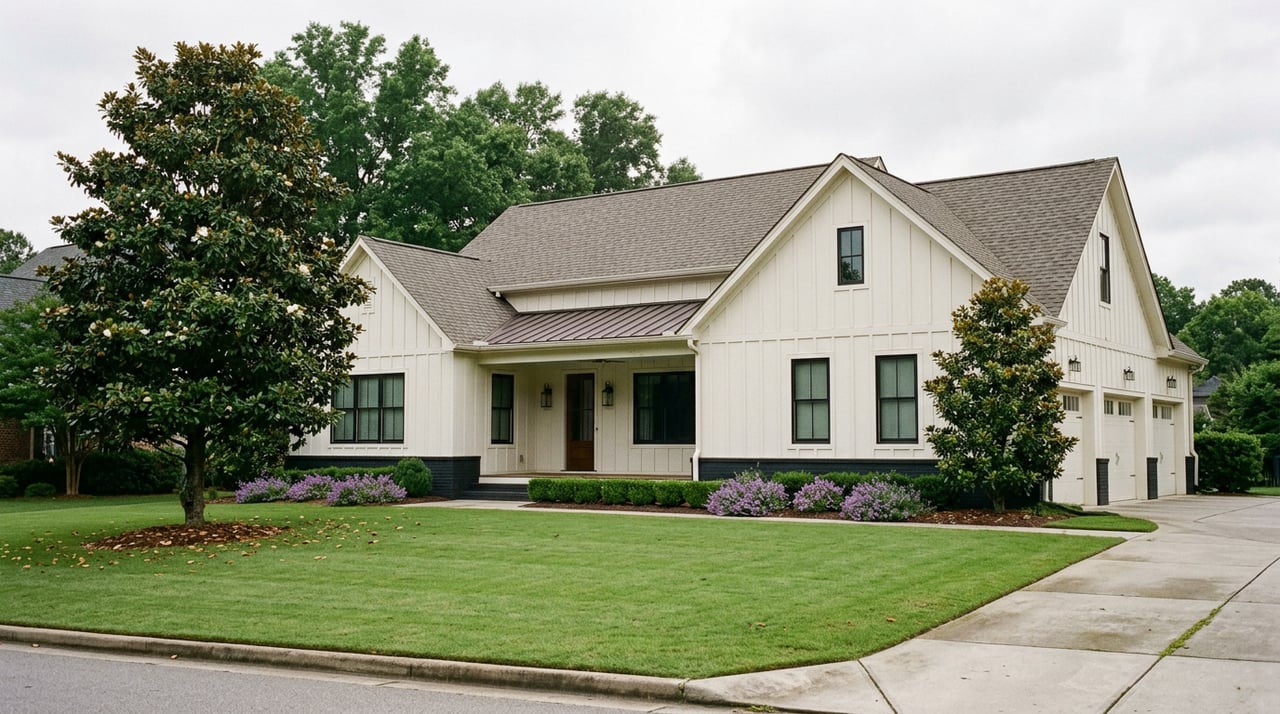
The Golf Cart in the Garage Isn't Actually Part of the Sale
September 17, 2026
September 17, 2026
I've stood in enough Peachtree City garages at final walkthrough to know the moment. The buyer sees the cart parked next to the water heater, assumes it came with the house the way the ceiling fans did, and starts planning weekend rides to Kedron Village before the ink on the closing documents is dry. Then, a week or two later, I get the call. The cart won't scan at the path kiosks. Nobody told them it needed its own paperwork.
Here's the thing most people moving to Peachtree City don't realize until they're standing in that garage: a golf cart is not a fixture. It doesn't convey with the deed the way a built-in dishwasher does. It has its own registration, tied to a specific owner, and that registration does not follow the bill of sale. In a city where the cart path system is the whole reason half of my clients are buying here, that's a detail worth getting right before you sign anything, not after.
Peachtree City requires every motorized cart to be registered with the city, and that registration belongs to a person, not a vehicle. When a cart changes hands as part of a home sale, the seller is supposed to file an Ownership Release Form, and the buyer has to complete a new registration, in person at City Hall, within 10 days of the purchase. The outgoing owner is separately required to notify the city of the ownership change within 10 business days.
None of this shows up on a settlement statement. It's not something a title company tracks. If nobody on your side of the transaction flags it, the cart sits in the garage looking exactly like it did the day before closing, decal and all, while its actual registration status has quietly gone stale. A current-looking decal on a cart doesn't tell you whether the registration behind it is still valid once ownership changes. That's a paperwork gap a buyer has to close themselves.
This is where 2026 specifically matters. In October 2025, the Peachtree City Council approved an amendment to the Motorized Cart Ordinance that changes where registration decals have to be mounted. Instead of the side placement long-time residents are used to, decals now have to be affixed to both the front and rear of the cart, unobstructed and clearly visible at all times.
To give cart owners time to adjust, the city pushed its own renewal calendar later than usual for this cycle. Resident three-year renewals covering 2026 through 2028, totaling $45, were due by March 31, 2026. Non-resident renewals, which run $250 a year (a $15 registration fee plus a $235 path user fee), showed up with two different deadlines on the city's own pages this year: April 30 on one page, May 31 on another. That kind of inconsistency is exactly why non-resident cart owners, and anyone buying a cart from one, should confirm the actual deadline directly with City Hall each renewal cycle rather than trusting a single web page.
The upshot for anyone buying or selling this year is straightforward: a cart that was fully compliant under the old rule may not be compliant today, independent of who owns it. A seller who registered a cart back in 2024 under the old side-mounted decal rule, and a buyer who inherits that same cart at closing now, could both be out of code without either one realizing it.
A decal on a cart tells you it was registered once. It doesn't tell you the registration is still active, or that the cart still meets the current placement rule.
There's a second layer to this that has nothing to do with the cart itself and everything to do with the path it rides on. Peachtree City's 100-plus mile path network is the feature every listing photo leans on, but not every stretch of that network is maintained by the city. Some segments belong to individual HOAs, and that distinction shows up in your dues, not in a brochure.
Master associations in some neighborhoods carry pools, gated entries, and their own portion of path upkeep as a line item in the budget. Smaller single-family HOAs might not touch path maintenance at all, leaving it entirely with the city. Two homes marketed with identical "direct golf cart path access" language can sit in HOAs with very different fee structures, and the only way to know which one you're buying into is to ask the specific subdivision's association which segment of path is theirs to maintain. That's separate, too, from country club dues at communities like Flat Creek, Braelinn Golf Club, or Planterra Ridge, which cover club amenities and are billed apart from any HOA or path fee.
None of this is disclosed automatically. It's buried in HOA governing documents that most buyers skim once and never open again.
Peachtree City's market has cooled from its pandemic-era pace, and that shift changes how much this kind of friction actually costs a transaction. Redfin's data for February 2026 showed a median sale price of $590,000, down 4.6 percent year over year, with homes taking a median of 65 days to sell. Movoto's March 2026 figures put the median sale price at $624,999 with homes spending 52 days on market, up from 27 days the year before, roughly double the pace of a market that used to move fast enough to paper over small mistakes.
When homes are selling in under a month, a missed cart registration or an unclear HOA path obligation is a minor annoyance you sort out later. When days on market have roughly doubled and buyers have more room to negotiate, the same loose end becomes something a sharp buyer's agent or a careful attorney can use to slow a closing down further, or reopen a conversation about who pays for what. Sellers who confirm their cart's registration status and disclose which HOA maintains their section of path before the home ever hits the market are removing a friction point that a slower, choosier market has more patience to notice.
If you're buying a Peachtree City home with a cart included in the deal, or selling one, this is worth walking through before closing rather than after:
Does the golf cart automatically come with the house if the listing says it's included? The cart itself can be part of the sale, but its city registration does not transfer with the bill of sale. The buyer still has to register it separately, and the seller still has to release it on their end.
What if I'm closing right around the decal placement change? Confirm with the seller when the cart was last registered and check the decal placement against the current front-and-rear requirement. If it predates October 2025, plan to update it as part of taking ownership.
Do all Peachtree City HOAs charge the same for path maintenance? No. Some paths are city maintained and some are HOA maintained, and that split varies by neighborhood. It's worth asking your specific association directly rather than assuming a citywide standard applies to your subdivision.
Getting the cart paperwork and the path maintenance question sorted before closing isn't about adding steps for the sake of it. It's about making sure the lifestyle you're buying into on day one still works exactly the way you pictured it on day two. If you're weighing a purchase or a listing in Peachtree City and want someone to walk through the details most guides skip, I'd be glad to help. Schedule a consultation with Angela Yoder and let's make sure nothing gets missed at the table.
Stay up to date on the latest real estate trends.






For buyers, I bring strategic negotiation, local insight, and calm confidence in competitive situations. For sellers, I offer a thoughtful pricing strategy, strong marketing, and careful guidance to position your home for maximum value. It would be an honor to represent you and help you achieve your real estate goals.