What Buyers Should Know About Peachtree City Golf Cart Living
June 25, 2026
June 25, 2026
What if your everyday errands did not start with buckling into a car? In Peachtree City, that question feels very real because golf cart living is woven into daily routines, not treated like a novelty. If you are thinking about moving here, understanding how the path system shapes where you go, how you get there, and what kind of home fits your life can help you make a smarter decision. Let’s dive in.
Peachtree City’s shared-use path system is a major part of how the city works. According to the city, the network includes more than 100 miles of paved paths across roughly 26 square miles, with about 38,244 residents and approximately 11,000 registered motorized carts.
That matters because it changes how you think about distance and convenience. Instead of asking only how quickly you can drive somewhere, you may also ask whether you can reach it easily by cart using the path network.
The city says the paths connect neighborhoods to shopping centers, schools, parks, places of worship, office and medical parks, recreation centers, and lakes. That level of connectivity helps explain why golf carts are part of normal daily life for many households.
City leaders describe everyday uses that go well beyond recreation. Official city materials reference trips for groceries, ice cream, restaurants, farmers market visits, golf outings, social visits, and local events.
For you as a buyer, that means mobility in Peachtree City can feel different from a typical suburb. A home’s connection to the path system may influence how you handle school drop-offs, quick errands, or meeting friends more than you expect.
Golf cart living also shapes the rhythm of weekends. Official city materials point to parks, lakes, golf courses, concerts at The Fred, farmers market outings, and events at Drake Field as part of local life.
When many of those destinations are accessible through the path network, getting out can feel simpler and more spontaneous. You may find yourself planning around path access as much as road access.
Not every home will function the same way within a cart-focused community. Two homes may be similar in size, style, or price, but their day-to-day convenience can feel very different depending on path access.
That is why it helps to look beyond the usual map search. In Peachtree City, one practical question is how directly a property connects to the shared-use path system and the destinations you expect to visit most often.
If you picture using a cart regularly, think about your common destinations. That could include shopping centers, parks, recreation spaces, or other places the city says are connected by the path system.
A home that works well for your lifestyle is not just about curb appeal or square footage. It is also about whether your routine fits the way Peachtree City is designed.
Cart living feels relaxed, but it is still regulated. Peachtree City requires registration for motorized carts, and the rules cover ownership, driver age, equipment, and where carts may operate.
If you are relocating from outside the area, these details are important because local cart use follows city-specific requirements. Knowing the basics early can help you avoid surprises after you move.
The city requires motorized cart registration with proof of ownership and photo ID. Carts are registered only to owners who are age 18 or older.
The city says new carts must be registered within 10 days of purchase. Ownership or contact changes must be reported within 10 business days, and moving must be reported within 60 days.
The city’s current 2026 information also says resident renewals follow a three-year cycle totaling $45. Nonresidents pay $15 annually plus a $235 path user fee.
Under the city ordinance, people age 16 and older may drive a motorized cart on shared-use paths and streets. Fifteen-year-olds may drive only under certain conditions.
For ages 12 to 14, a parent, grandparent, or legal guardian must be in the front seat. No one under age 12 may drive a motorized cart in the city’s public-access areas.
The ordinance says motorized carts may not be operated on sidewalks. Nighttime use requires headlights and taillights.
The city also sets expectations for behavior on the paths. Pedestrians and people with disabilities have the right-of-way, users should keep right and pass on the left, and operators should warn others when overtaking from behind.
Dangerous conduct is not allowed. The ordinance also applies local alcohol rules to the paths and requires proper disposal of litter.
If you are comparing a golf cart with a low-speed vehicle, it is important to know they are not treated the same way. The city says low-speed vehicles may use shared-use paths only if they are limited to 20 miles per hour, properly registered and insured, driven by licensed drivers, and equipped with an amber strobe light.
The city also notes that low-speed vehicles must be tagged through the Fayette County Tag Office. If you are shopping for a home and considering what kind of vehicle fits your lifestyle, this distinction matters.
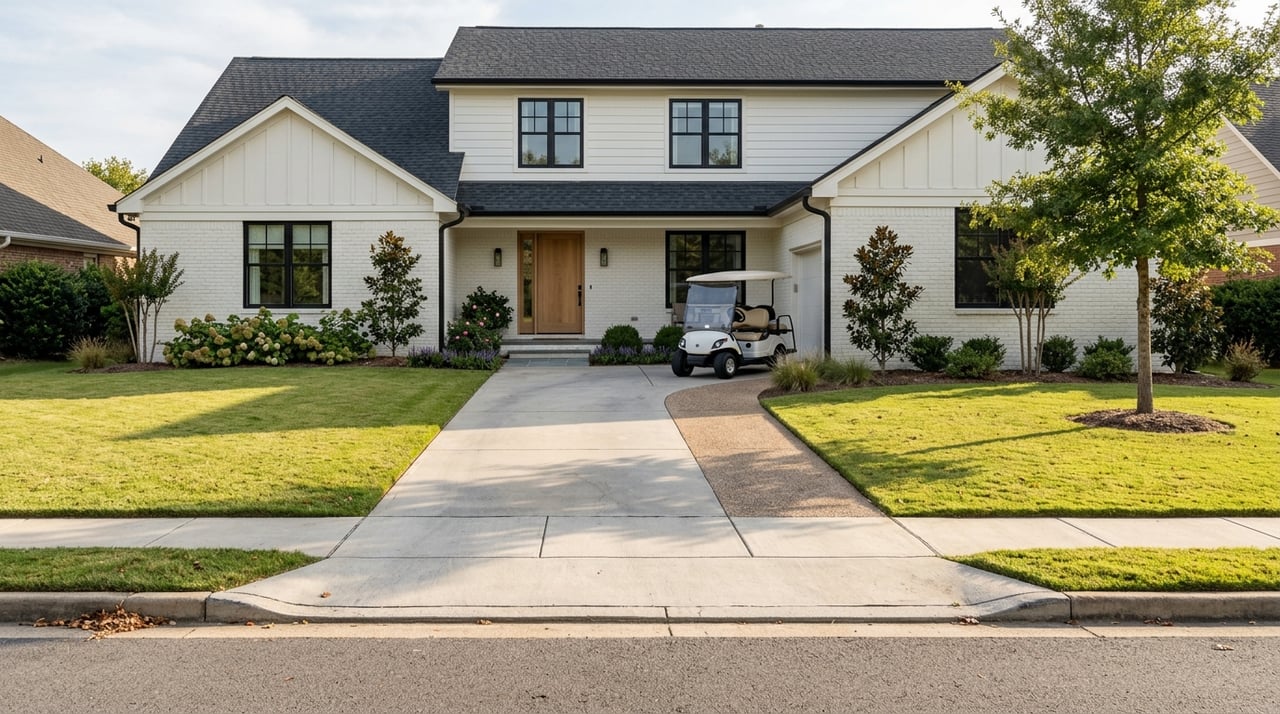
In many suburbs, buyers focus on bedrooms, lot size, and kitchen updates first. In Peachtree City, golf cart living adds another layer because storage, parking, and driveway setup can affect how practical a home feels.
That does not mean every property needs the same setup. It does mean you should think ahead about how a cart would fit into the property itself, not just the neighborhood around it.
Garage depth and overall storage space can become more important in a cart-friendly city. If you plan to own a cart, you may want room that supports storage and charging without creating daily hassle.
This is especially relevant if you are choosing between homes that otherwise feel similar. A layout that works better for cart storage may improve everyday convenience.
The city ordinance requires vehicle parking on private property to be on paved asphalt, concrete, or another acceptable all-weather surface. It also says certain larger vehicles must be fully inside an enclosed garage or roofed carport.
The ordinance prohibits motorized cart parking in marked no-parking areas along the shared-use path system. It also restricts parking on some residential streets and roadways, so your driveway layout and on-site parking options matter.
Peachtree City’s code enforcement office is responsible for enforcing city ordinances. That means path use and parking rules are part of routine community compliance, not optional guidelines.
For you, the takeaway is simple. Cart living works best when the property supports legal parking, practical storage, and the way you actually plan to use the cart.
If you are relocating to Peachtree City, it helps to treat golf cart living as both a lifestyle feature and a practical transportation system. The path network can influence how you shop, socialize, run errands, and enjoy local events.
That is why home selection here often involves more than floor plans and finishes. You are also evaluating how a property connects to the city’s shared-use path network and whether the home can support cart ownership in a realistic way.
For many buyers, that local context is where real clarity comes from. A steady, informed home search can help you match the right property with the way you want to live day to day.
If you are considering a move to Peachtree City or anywhere in Fayette County, Angela Yoder can help you evaluate not just the home, but how it fits your lifestyle, routine, and long-term goals.
Stay up to date on the latest real estate trends.


For buyers, I bring strategic negotiation, local insight, and calm confidence in competitive situations. For sellers, I offer a thoughtful pricing strategy, strong marketing, and careful guidance to position your home for maximum value. It would be an honor to represent you and help you achieve your real estate goals.